The Digital Tightrope: How Emerging Technologies Are Revolutionizing Business
A deep dive into the transformative power of augmented reality (AR), artificial
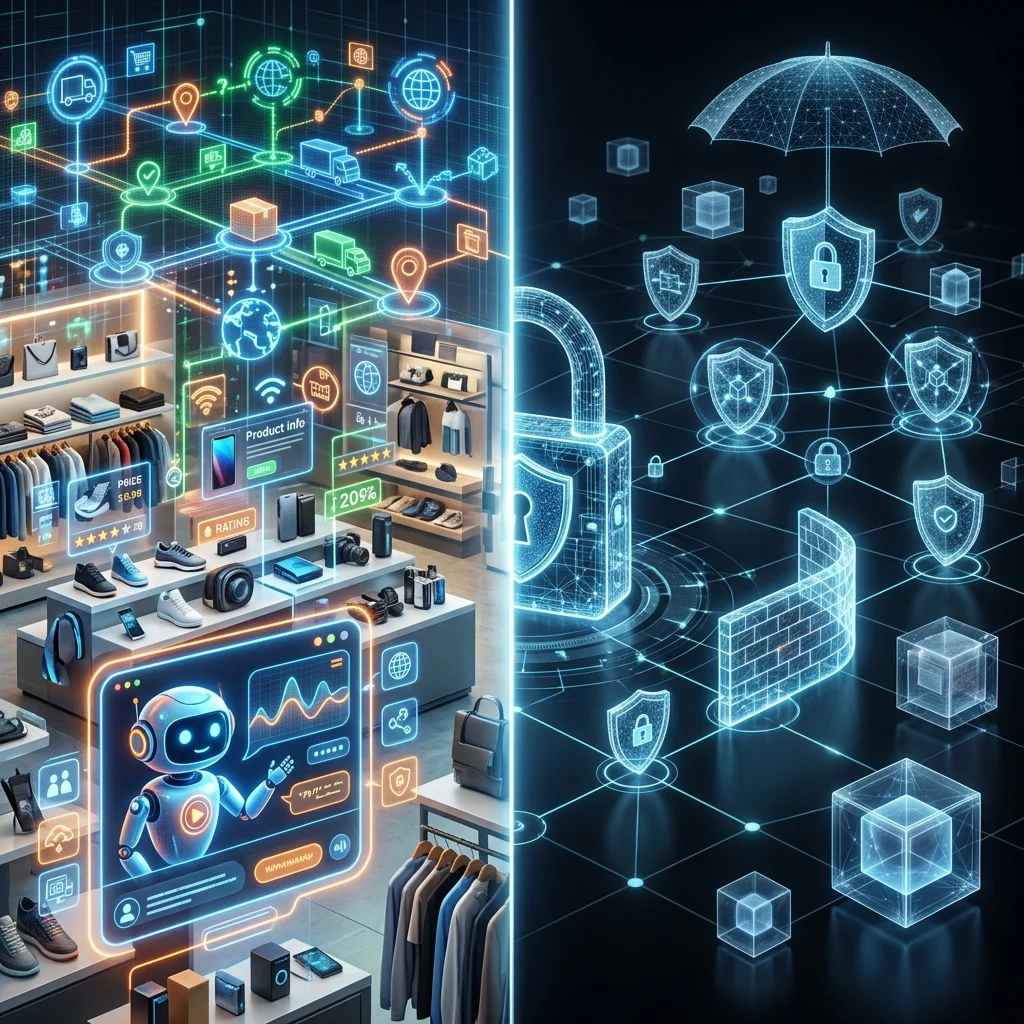
A deep dive into the transformative power of augmented reality (AR), artificial
The Digital Tightrope: How Emerging Technologies Are Revolutionizing Business While Exposing New Vulnerabilities
1. Introduction: The Promise and Peril of Digital Transformation
In 2020, when the pandemic forced retail into a digital sprint, Adidas rolled out a virtual try-on feature for sneakers. Within months, the company reported a 20% surge in customer engagement among AR users and a staggering 90% increase in conversion rates. Wayfair followed a similar path: its "View in Room" augmented reality tool allowed customers to place furniture in their homes before buying, driving conversion uplifts that competitors could only envy.
These numbers are not anomalies. Across industries, emerging technologies—augmented reality, artificial intelligence, the Internet of Things, and blockchain—are rewriting the rules of customer engagement, operational efficiency, and supply chain transparency. The promise is undeniable: faster personalization, smarter logistics, and immersive brand experiences that were science fiction a decade ago.
But there is a shadow side. In May 2019, First American Corporation, a major title insurance firm, exposed more than 800 million sensitive documents—including bank account numbers and Social Security records—due to a simple authentication flaw. Two years later, the Microsoft Exchange Server hack compromised thousands of organizations worldwide, exploiting vulnerabilities in software running at the heart of corporate communications.
These two narratives—the breathtaking upside of emerging technologies and the catastrophic cost of security failures—define the central challenge of modern business. Companies racing to adopt AI chatbots, IoT sensors, and blockchain-based systems must simultaneously confront new vulnerabilities. It is a digital tightrope walk where innovation and security are not opposing forces but two sides of the same coin.
[IMAGE: A balancing scale with a glowing smartphone on one side showing AR furniture, and a cracked padlock on the other.]
---
2. Revolutionizing Customer Engagement: AR, AI, and VR in Action
Augmented Reality: From Novelty to ROI Driver
The retail sector has become the proving ground for AR’s commercial viability. Adidas’s virtual try-on technology, powered by computer vision and AR overlays, allows customers to see how shoes look on their feet without leaving home. The result: not just higher conversions, but significantly lower return rates—a critical margin driver in footwear.
Wayfair’s "View in Room" feature leverages AR to let shoppers visualize sofas, tables, and lamps in their actual living spaces. The company’s data shows that customers who use AR are nearly twice as likely to make a purchase. This isn’t just about engagement metrics; it’s about reducing purchase anxiety, the single biggest barrier to online furniture sales.
AI Chatbots: Always-On Personalization
AI-powered chatbots have evolved far beyond simple FAQ bots. Lowe’s LoweBot, deployed across hundreds of stores, uses natural language processing to help customers find products, check inventory, and even guide them to the right aisle. The result: reduced staff workload and faster customer resolution times.
More sophisticated implementations are emerging in luxury and service industries. AI chatbots now analyze browsing history, purchase patterns, and real-time behavior to offer hyper-personalized recommendations. When integrated with CRM systems, these chatbots can upsell and cross-sell with an accuracy that rivals top human sales associates.
Immersive Experiences: Disney’s Gamified AR Parks
Perhaps no company understands the intersection of emerging technologies and customer emotion better than Disney. Following its $1.5 billion investment in Epic Games, Disney is building a persistent AR/VR universe that blends physical park visits with digital gamification. Visitors at Disney World can already use their smartphones to scan park landmarks and unlock AR characters, mini-games, and exclusive content.
Behind the scenes, AI-driven engineering powers everything from ride optimization to crowd management. Sensors embedded in park infrastructure feed data into machine learning models that predict wait times, adjust staffing, and even manage food inventory. The result is a seamless experience where technology disappears into the background—exactly the mark of successful digital transformation.
Employee Training and Product Demonstrations
Beyond customer-facing applications, AR and VR are transforming employee training. Walmart uses VR headsets to train employees in scenarios ranging from Black Friday crowds to hazardous material spills. The immersive environment allows for low-risk repetition that traditional training cannot match. Product demonstrations for complex industrial equipment are also moving to AR, where technicians can overlay schematics onto physical machinery.
[IMAGE: Person using smartphone to view a virtual sofa in their living room, with a small chatbot icon appearing on screen.]
---
3. Transforming Operations: IoT, AI, and Blockchain in Supply Chain
IoT Sensors: Real-Time Visibility
The Internet of Things has turned supply chains from opaque systems into transparent networks. Sensors on shipping containers track location, temperature, humidity, and shock events in real time. Pharmaceutical companies use IoT to ensure vaccines remain within cold-chain parameters; food distributors monitor produce freshness from farm to store.
In warehouses, IoT-enabled shelves automatically detect low inventory and trigger reorders. Equipment performance sensors predict maintenance needs before breakdowns occur, reducing downtime. According to a McKinsey survey, 43% of merchants plan to integrate AI and machine learning into their supply chain planning within the next two years—a shift driven largely by IoT data.
AI-Driven Demand Forecasting
Traditional demand forecasting relies on historical data and human intuition. AI-driven forecasting incorporates weather patterns, social media trends, economic indicators, and even local events to predict demand with far greater accuracy. The results are tangible: fewer stockouts, reduced overstock, and lower warehousing costs.
Global retailers like Walmart and Amazon have been refining these models for years. Now, mid-market companies are adopting AI platforms that plug into existing ERP systems, making machine learning accessible without a team of data scientists.
Automation and Robotics
Self-driving trucks are already making test deliveries on US highways, and warehouse robotics have become standard in major e-commerce fulfillment centers. Robots from companies like Geek+ and Locus Robotics move inventory shelves to human pickers, doubling throughput while reducing physical strain on workers.
The key insight: automation doesn't eliminate jobs; it shifts them. Employees freed from repetitive lifting and scanning can focus on exception handling, quality control, and customer service—higher-value roles that technology enables rather than replaces.
Blockchain: Tamper-Proof Transparency
Blockchain’s role in supply chain goes beyond cryptocurrency buzz. By creating decentralized, tamper-proof records, blockchain enables end-to-end traceability. Food companies use it to track produce from farm to shelf, allowing instant recall of contaminated batches. Luxury goods manufacturers authenticate products to combat counterfeiting.
In finance and real estate, blockchain streamlines transactions by eliminating intermediaries. Smart contracts automatically execute when conditions are met, reducing paperwork and settlement times from days to minutes. However, implementation challenges remain—scalability, energy consumption, and regulatory uncertainty keep blockchain adoption cautious outside early adopters.
[IMAGE: A warehouse interior with robotic arms moving boxes, overlaid with digital IoT data streams and a blockchain chain icon.]
---
4. The Dark Side: Cybersecurity Breaches and Data Vulnerabilities
The Scale of the Problem
The 2019 First American Corporation breach exposed over 800 million documents because a developer accidentally left authentication disabled on a public-facing web application. It wasn't a sophisticated nation-state attack; it was a simple misconfiguration with catastrophic consequences.
The 2021 Microsoft Exchange Server hack was different in method but similar in impact. Attackers exploited four zero-day vulnerabilities to access email servers at thousands of organizations, including local governments, law firms, and small businesses. The fallout included data theft, ransomware deployment, and months of remediation costs.
These are not isolated incidents. According to the Identity Theft Resource Center, data breaches in the US reached an all-time high in 2023. The average cost of a data breach now exceeds $4.5 million, according to IBM's annual report. For companies deploying AI chatbots, IoT sensors, and blockchain systems, the attack surface expands exponentially.
Data Clean Rooms: Compliance Without Sacrifice
How can companies leverage customer data for personalization while respecting GDPR, CCPA, and other privacy regulations? Data clean rooms (DCRs) offer a solution. A DCR is a secure environment where two or more parties can analyze shared data without exposing raw information to each other.
Imagine a retailer and a consumer goods brand wanting to understand which ad campaigns lead to in-store purchases. Instead of sharing customer lists, they upload encrypted data to a DCR, where queries run on aggregated, anonymized results. No individual data leaves the room.
Major platforms like Google Ads Data Hub and Amazon Marketing Cloud operate DCRs for advertisers. Companies like Habu and InfoSum provide standalone solutions for enterprises. The market for data clean rooms is expected to grow at over 25% annually as privacy regulations tighten.
Synthetic Data: Training AI Without Privacy Risks
Another emerging solution is synthetic data—artificially generated datasets that mimic real-world statistical properties without containing actual personal information. Financial institutions use synthetic data to train fraud detection models. Healthcare researchers generate synthetic patient records to develop diagnostic algorithms without violating HIPAA.
Synthetic data offers a key advantage: it can be customized to include rare edge cases that are underrepresented in real datasets, improving model robustness. Privacy advocates and regulators are increasingly supportive, though challenges around data utility and re-identification risk remain active research areas.
Zero Trust Architecture: Never Trust, Always Verify
Traditional perimeter-based security assumes that anyone inside the network is trustworthy. Zero Trust Architecture flips that assumption: no user, device, or application is trusted by default. Every access request must be authenticated, authorized, and continuously validated.
Implementation involves micro-segmentation (dividing networks into small zones), multi-factor authentication (MFA), and continuous monitoring of user behavior. Major breaches often occur because a single compromised credential gives attackers lateral movement across the entire network. Zero Trust limits the blast radius—even if an attacker gains access to one system, they cannot freely roam.
Companies like CrowdStrike, Okta, and Zscaler provide Zero Trust frameworks that integrate with existing infrastructure. The US federal government mandated Zero Trust adoption across all agencies in 2022, signaling its importance for national security.
[IMAGE: A network diagram with nodes protected by shields, a central lock icon, and transparent data containers floating in a blue background.]
---
5. Walking the Tightrope: Strategies for Balancing Innovation and Security
The Economic Logic of Integration
The most common mistake companies make is treating innovation and security as separate budgets. Innovation teams push for rapid deployment; security teams demand rigorous controls. The result is friction, delay, and often shadow IT—employees bypassing security to get work done.
Forward-thinking organizations recognize that innovation and security are two sides of the same coin. A data clean room isn't just a compliance tool; it enables partnerships that generate new revenue streams. Zero Trust Architecture isn't just a security expense; it reduces the risk of costly breaches that destroy customer trust and brand value. Synthetic data isn't just a privacy workaround; it accelerates AI model development by providing richer, safer training sets.
Building a Culture of Shared Responsibility
Technology alone cannot solve the tightrope challenge. Culture matters. Companies that succeed embed security awareness into every phase of development—from design to deployment to ongoing monitoring. This "shift left" approach means security is not a last-minute gate but a continuous conversation.
Training programs should include non-technical staff who handle customer data, executives who approve technology budgets, and developers who write code. Regular tabletop exercises simulating breach scenarios help teams practice response coordination.
Practical Steps for Executives
- Conduct a risk-benefit audit for each emerging technology deployment. What data will be collected? Who will have access? What happens if it's breached? Quantify both the potential revenue upside and the expected loss from security failure.
- Invest in data clean rooms for any partnership involving customer data. This enables collaboration without exposure, and it builds trust with regulators and consumers alike.
- Implement Zero Trust Architecture incrementally. Start with the most sensitive systems: financial data, customer databases, intellectual property repositories. Expand as resources allow.
- Explore synthetic data for AI training. Evaluate whether real data is truly necessary for your use case. Synthetic alternatives often deliver comparable performance at a fraction of the privacy risk.
- Create a cross-functional innovation-security council. Include CIO, CISO, CMO, and operations leadership. Meet monthly to review new technology proposals and incident trends.
---
6. Conclusion: The Only Way Forward
The digital tightrope is not going away. AR, AI, IoT, and blockchain will continue to reshape industries, creating winners and losers. Companies that ignore these technologies risk irrelevance; companies that adopt them recklessly risk disaster.
The evidence is clear: Adidas and Wayfair prove that AR can transform conversion rates. Disney shows that immersive experiences build customer loyalty. IoT and AI optimize supply chains at scale. Yet First American Corporation and Microsoft demonstrate that one unpatched vulnerability can undo years of progress.
The solution is not to slow innovation, nor to accept risk as inevitable. It is to embed security into the DNA of digital transformation. Data clean rooms, synthetic data, and Zero Trust Architecture are not constraints—they are enablers. They allow businesses to move fast without breaking things.
The companies that will thrive in the coming decade are those that understand the hidden economic logic: innovation and security are not trade-offs. They are the twin pillars of sustainable growth. Walking the tightrope requires balance, awareness, and the courage to invest in both sides.
[IMAGE: A digital tightrope stretched between two glowing pillars: one labeled "Innovation" with AR icons, the other "Security" with shield icons. A silhouetted figure walks confidently across.]
Marcus Weber
Covers European tech ecosystem, from Berlin startups to Brussels tech policy.